
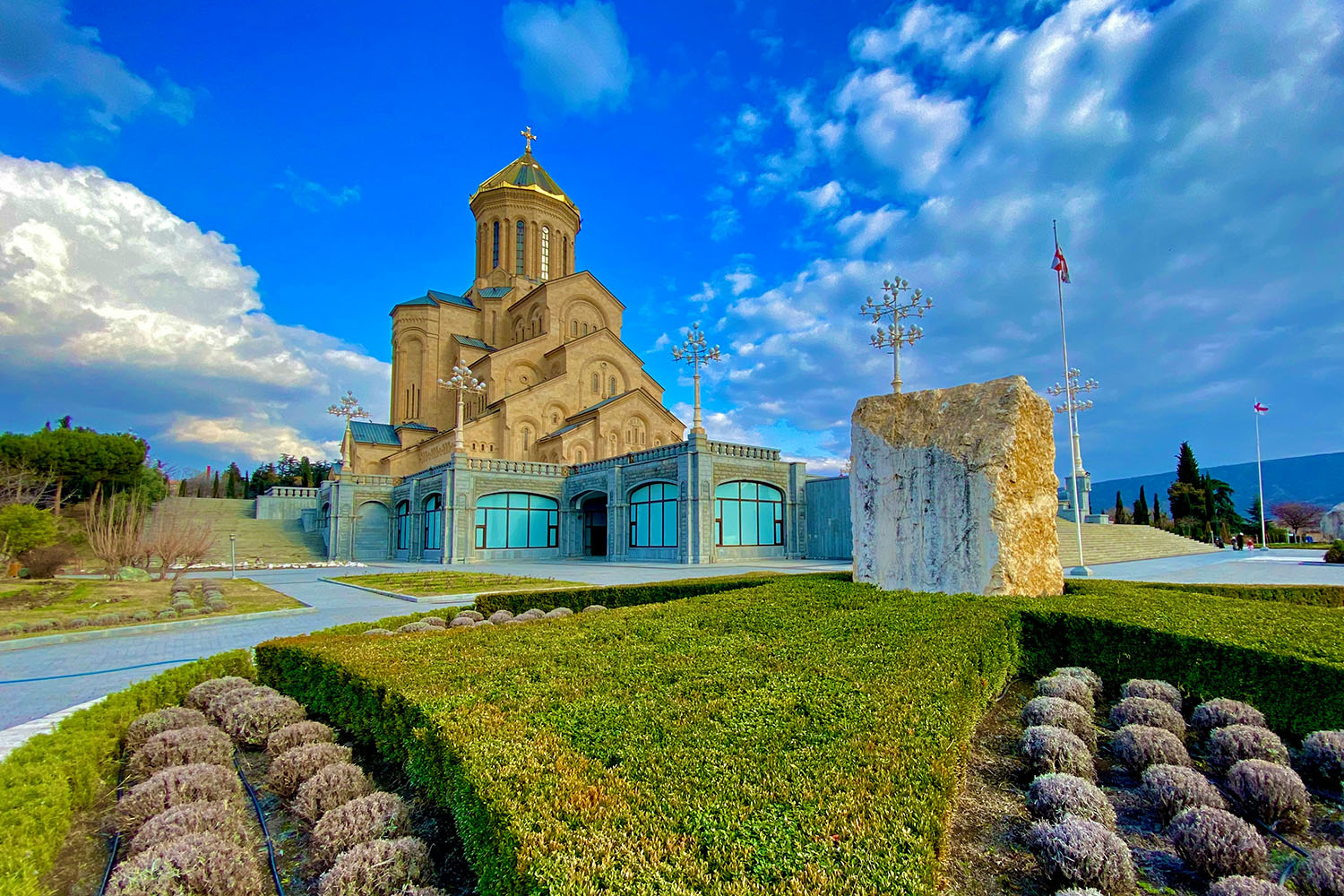
Tbilisi
Tbilisi was founded in the 5th century during the reign of King Vakhtang Gorgasali, whose name means “wolf-headed.”
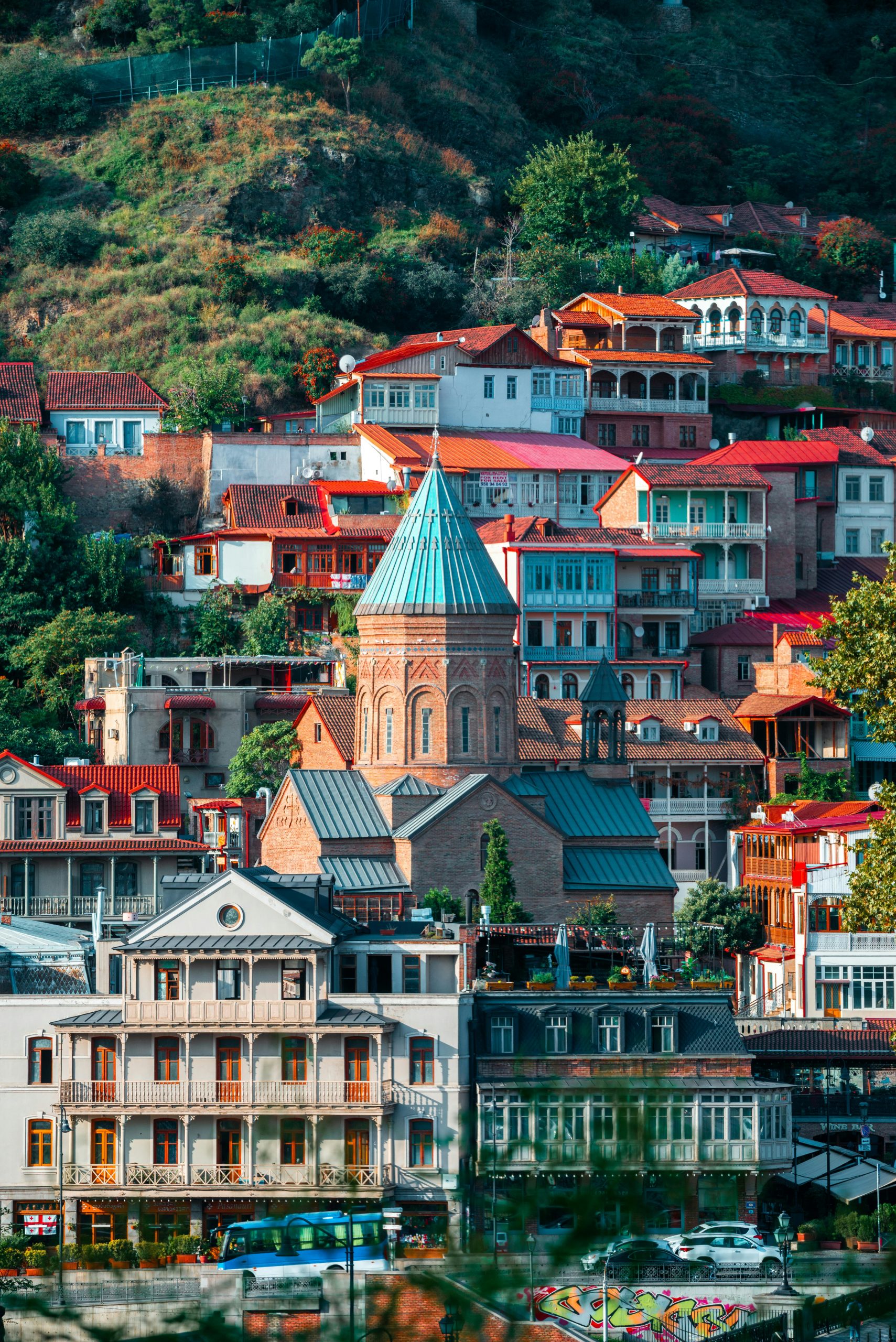
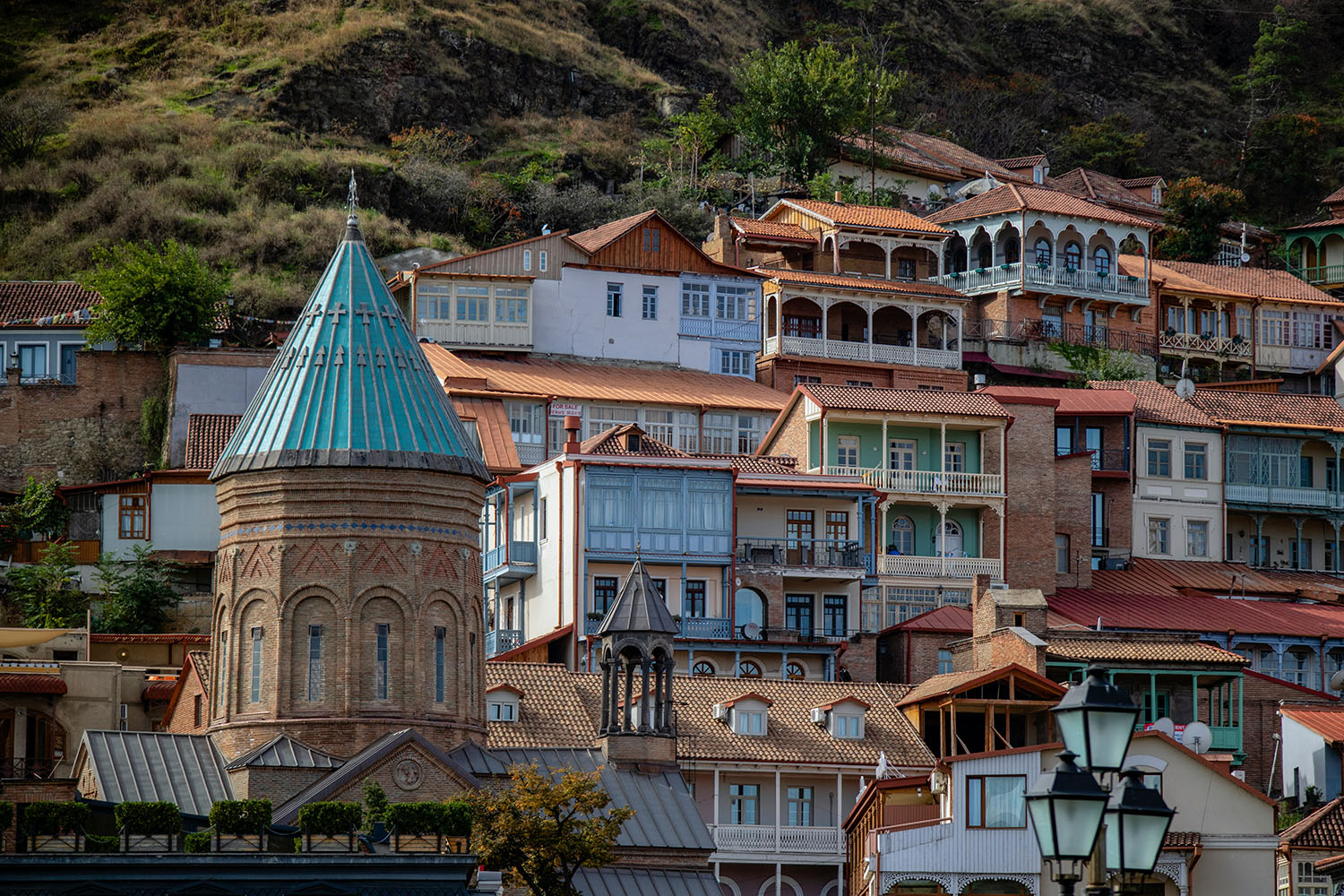
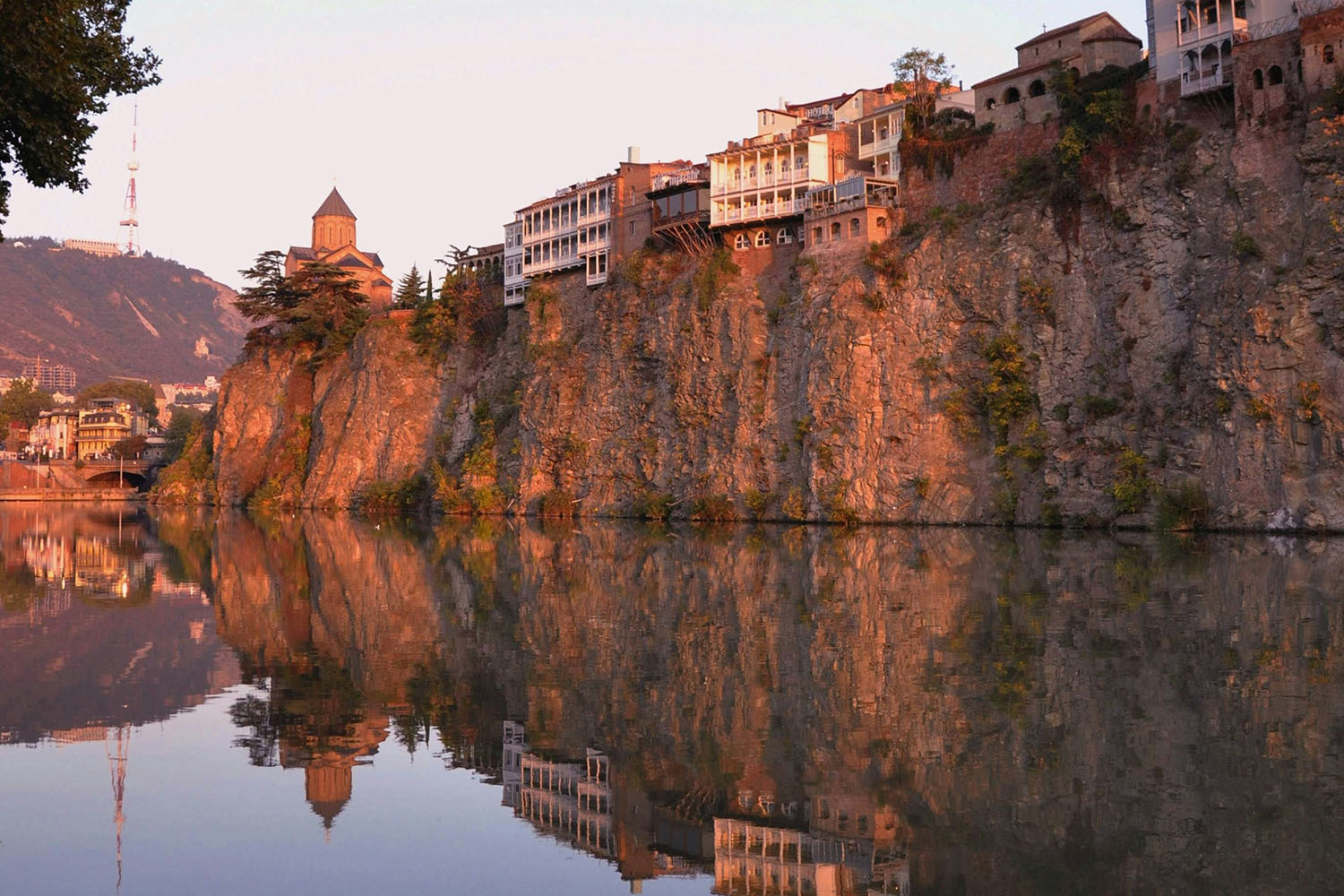
The city is rich in historic districts, each with its own character and identity — among the most notable are Mtatsminda, Sololaki, Abanotubani, and Chugureti.
Tbilisi has a very distinct character.
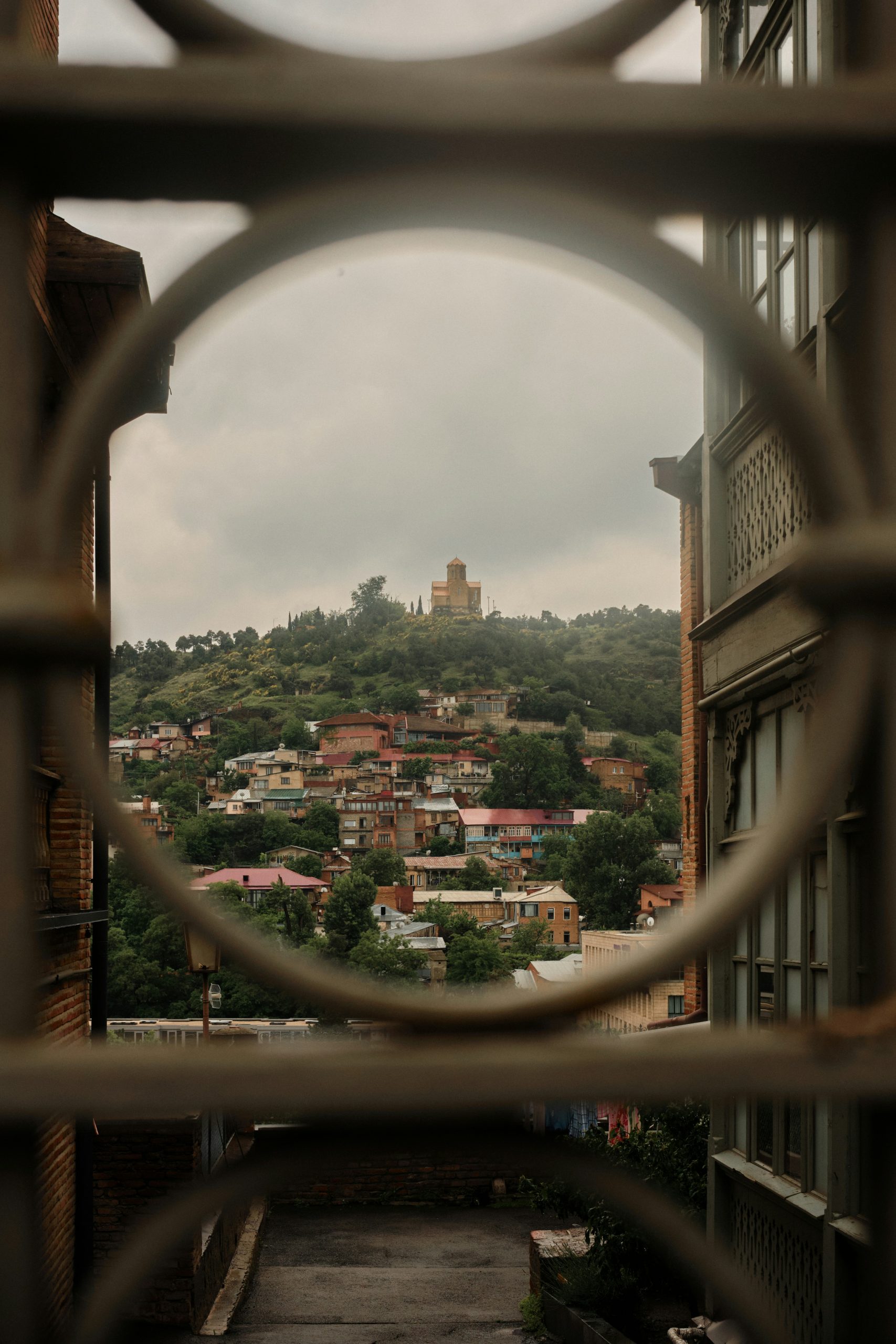
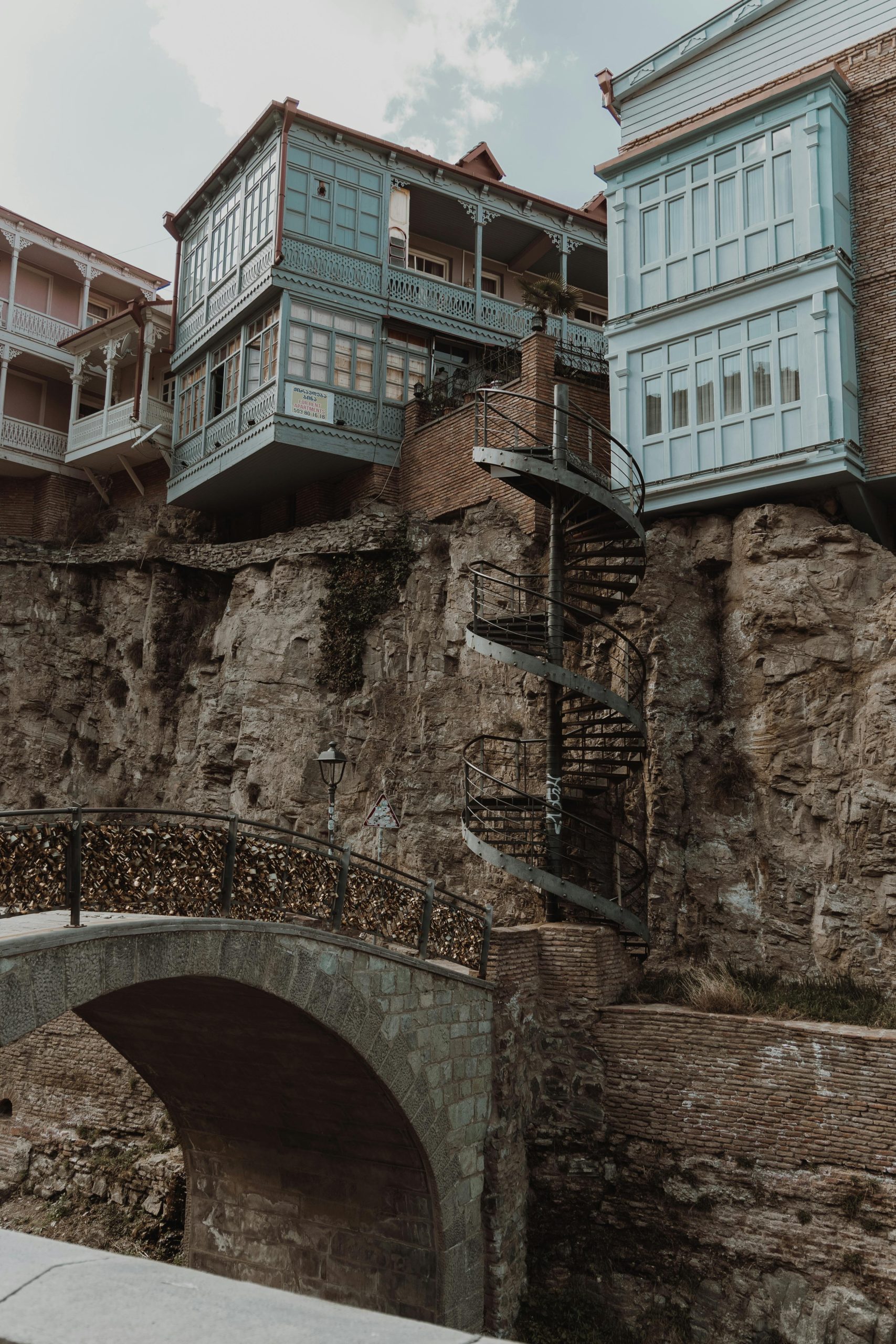
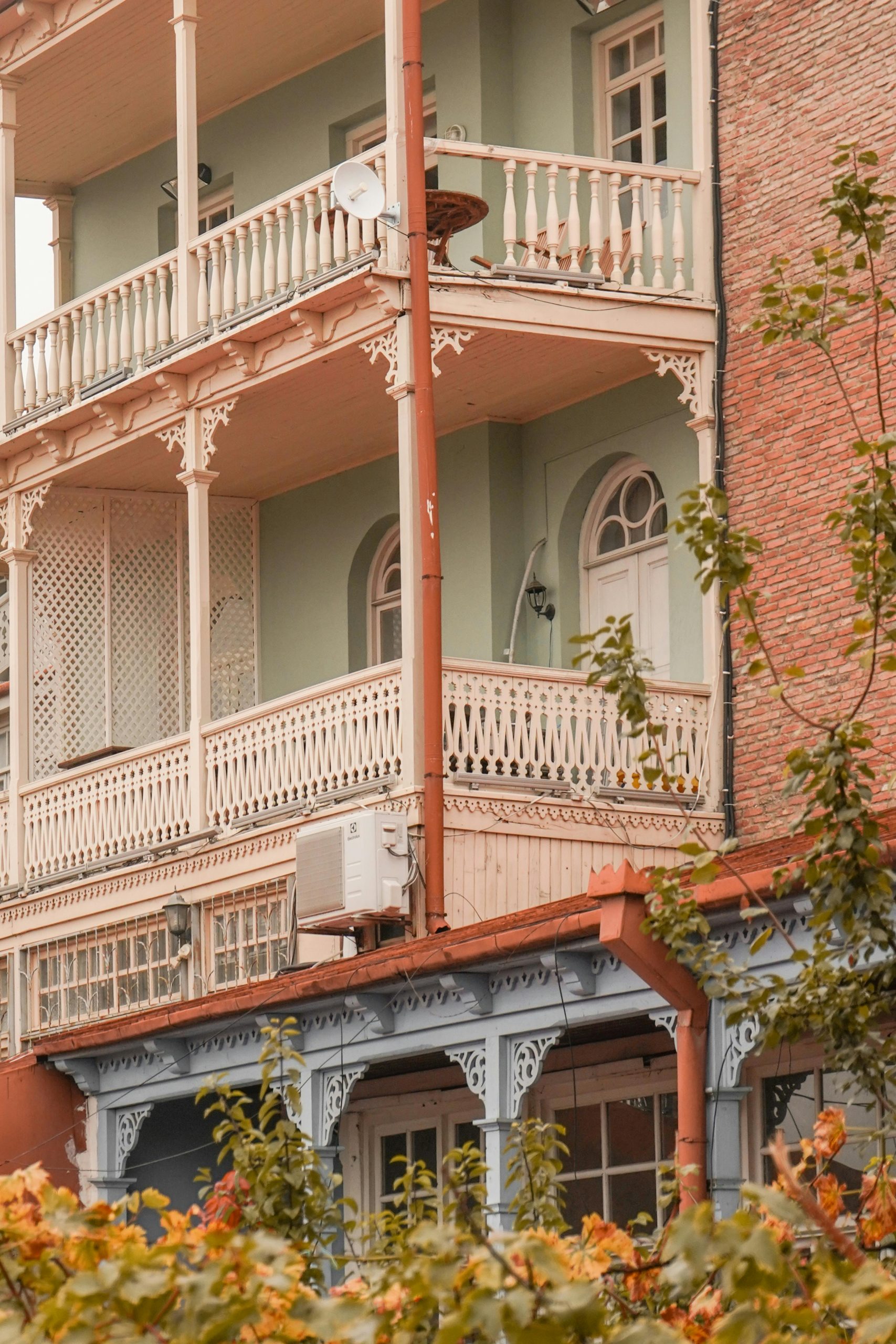
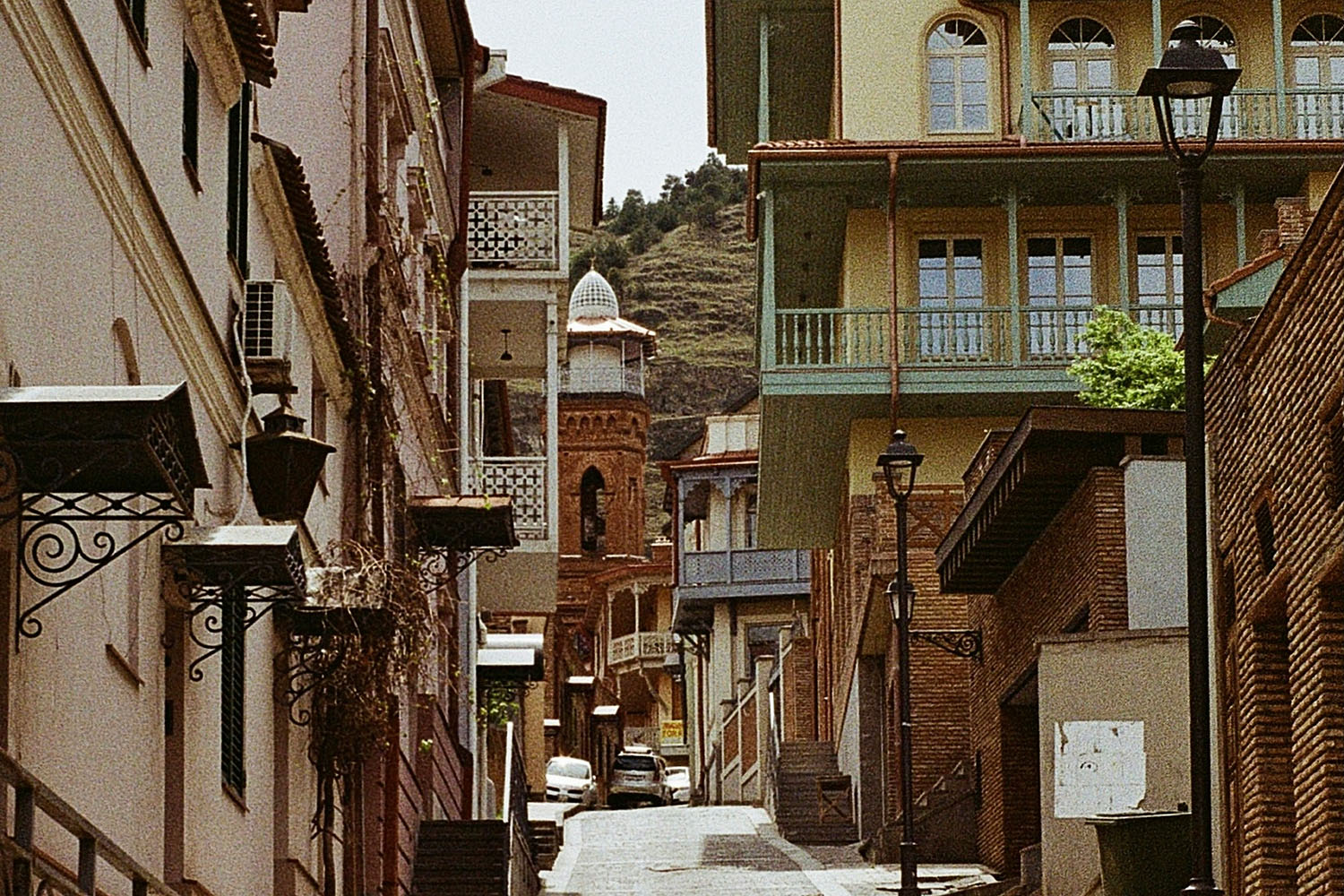
Old streets, wooden balconies, and buildings from different periods stand side by side, creating a natural mix of styles.
You will often notice small details — inner courtyards, uneven facades, worn textures — that give the city its atmosphere and make it feel real rather than polished.
Tbilisi reflects Georgia’s natural sense of tolerance. In the Abanotubani district, an Orthodox church, a mosque and a synagogue are located within the same area.
Abanotubani is also known for its sulfur baths, which have existed here since the early centuries of the city.
Mtatsminda is one of the most recognizable parts of Tbilisi, located on the hillside above the city.
It offers panoramic views, quiet streets, and a more relaxed atmosphere compared to the center.
Sololaki reflects Tbilisi’s architectural heritage.
Historic buildings, ornate facades, and old entrances give the area a refined, distinctive character.
Chugureti is a central district of Tbilisi on the left bank of the river.
It combines a local, residential character with a mix of historic architecture and everyday city life.
The district is also home to several theatres and cultural venues, shaping an important cultural layer of the city.
Tbilisi can be visited year-round.
Spring and early autumn are the most comfortable seasons, with mild weather and green surroundings.
Summer is warmer, but the city remains lively, with long evenings and a vibrant atmosphere.
Mtskheta
Mtskheta is the ancient capital of Georgia and one of its main spiritual centers, located just 20–30 minutes from Tbilisi.
In the 4th century, Saint Nino brought Christianity to Georgia here, raising the cross on the hill above the town and marking the beginning of the country’s Christian history.
Jvari Monastery, built in the 6th century, stands on that hill, overlooking the confluence of the Mtkvari and Aragvi rivers, and remains one of the most iconic viewpoints in Georgia.
Svetitskhoveli Cathedral, originally established in the 4th century and rebuilt in the 11th century, is one of the most important religious sites in the country and continues to function as an active place of worship.
Samtavro Monastery, founded in the 4th century, is closely connected to Saint Nino and is known for its peaceful setting and historical significance.
These landmarks form part of the UNESCO World Heritage site “Historical Monuments of Mtskheta”, with Jvari Monastery and Svetitskhoveli Cathedral as its key highlights.
Mtskheta is not only about history — it is also known for its calm atmosphere, scenic views, and the natural harmony between landscape and architecture.
Kutaisi
Kutaisi is one of the oldest cities in Georgia, with history going back to the 6th century BC.
It was the center of the ancient Kingdom of Colchis, located in what is now western Georgia.
This land became known through the story of the Golden Fleece.
According to the legend, people came here in search of gold.
The story is believed to come from a real local tradition — in the rivers of this region, sheep wool was used to catch small pieces of gold.
Over time, this practice turned into the legend of the Golden Fleece, closely connected to the nature and history of Georgia.
Centuries later, Kutaisi became an important royal city.
It is strongly connected to King David the Builder (11th–12th century), one of the most important rulers in Georgian history, known for uniting and strengthening the country.
During his time, Kutaisi developed as a major cultural and religious center.
Bagrati Cathedral (11th century) and Gelati Monastery (12th century), founded by King David the Builder, are closely linked and reflect this period of growth and unity.
Today, they are part of the UNESCO World Heritage site and remain some of the most important landmarks in Georgia.
Kutaisi is also a gateway to some of the most impressive natural landscapes in western Georgia.
Martvili Canyon is known for its turquoise waters and narrow gorges, where boat rides pass quietly between high cliffs.
Prometheus Cave reveals a hidden underground world, with large halls, natural formations, and long passages that create a different sense of space.
Okatse Canyon offers wide open views across deep landscapes, with walking paths and viewing platforms set above the canyon.
All these locations are within 1 to 2 hours from Kutaisi, making the city a convenient base for exploring the region.
Kutaisi feels different from Tbilisi — calmer, more traditional, and closely connected to Georgia’s history and natural landscape.
Sighnaghi
Sighnaghi is a small town in eastern Georgia, located around 2 hours from Tbilisi, overlooking the Alazani Valley and the Caucasus Mountains.
The town developed in the 18th century during the reign of King Erekle II, who built defensive walls with towers that still surround the area today.
Walking along these walls, the views open widely over vineyards and mountains.
Sighnaghi is known for its beauty and calm atmosphere.
Its narrow streets, balconies, and warm colors create a very distinctive setting, different from larger cities.
The town is also closely connected to art.
It is the birthplace of Niko Pirosmani ((1862–1918), one of Georgia’s most well-known painters, whose simple and expressive style became recognized around the world.
Sighnaghi is part of the Kakheti region, where wine has been made for thousands of years.
Here, wine is not just a product, but a part of everyday life, tradition, and hospitality.
There is also a well-known local story about love, often associated with the town — adding another layer to its identity, even though Sighnaghi remains quiet and balanced rather than busy.
With its elevated position and open views, Sighnaghi offers one of the most scenic landscapes in eastern Georgia.
Telavi
Telavi is one of the oldest towns in Georgia and today serves as the main center of the Kakheti region — the heart of Georgian winemaking.
Located around 1.5 to 2 hours from Tbilisi, Telavi offers a different rhythm of life, where traditions remain an important part of everyday experience.
The town is closely connected to King Erekle II (18th century), one of the most important rulers in Georgian history.
His residence, known as the Batonis Tsikhe (Erekle II Palace Fortress), still stands in Telavi and remains one of its key landmarks.
Kakheti is considered the birthplace of wine, with an 8,000-year-old winemaking tradition, and Telavi plays a central role in this heritage.
This tradition is closely linked to qvevri — large clay vessels buried in the ground, used for fermenting and storing wine.
Even today, there are families in the region who continue to produce qvevri by hand, following techniques passed down through generations.
These craftsmen shape the vessels from clay, fire them, and prepare them for use in winemaking, preserving a tradition that has remained unchanged for centuries.
Telavi is also closely connected to local food traditions.
In the surrounding villages, small family-run producers continue to make traditional cheeses using methods passed down through generations, adding depth to the region’s culinary culture.
The surrounding landscapes — vineyards, the Alazani Valley, and the Caucasus Mountains — create open and scenic views, especially beautiful in spring and autumn.
Telavi offers a different side of Georgia — calmer, more traditional, and deeply connected to history, wine, and local life.
Akhaltsikhe
Akhaltsikhe, meaning “New Castle”, developed as an important town in southern Georgia during the medieval period, especially from the 9th–12th centuries.
At the center of the town stands Rabati Fortress, a complex that reflects the layered history of the region.
Over time, different cultures influenced this area, which can still be seen today — a church, a mosque, and historic buildings are all located within the same space.
Rabati Fortress was carefully restored in the 21st century and today combines historical architecture with well-maintained public areas, making it suitable for visits, events, and cultural programs.
From Akhaltsikhe, it takes around 1 to 1.5 hours to reach Vardzia, one of the most unique historical sites in Georgia.
The road to Vardzia passes through open landscapes and river valleys, making the journey itself part of the experience.
Vardzia was created in the 12th century during the reign of Queen Tamar.
It was not only a monastery, but also a hidden city carved into the rock, designed to protect people during times of invasion.
At its peak, Vardzia is believed to have included up to 13 levels and hundreds of interconnected spaces carved into the cliff.
Even today, walking through the complex feels like moving inside a carved mountain.
According to a well-known story, the name “Vardzia” comes from Queen Tamar’s childhood words — “Ak var, dzia” (“I am here, uncle”), which later became the name of the site.
The scale of the complex and its connection to the landscape make it one of the most visually striking sites in Georgia.
Akhaltsikhe and its surroundings offer a very different side of Georgia — quieter, more remote, and deeply connected to its history and landscape.
Asureti
Asureti, once known as Elisabethtal, was founded in the early 19th century by German settlers invited to the Russian Empire. What makes it stand out even today is its architecture — rare half-timbered houses, wooden balconies, and a layout that feels more Central European than Georgian.
The village was once a well-organized settlement with its own church, vineyards, and agricultural system. Over time, especially during the Soviet period, much of its original identity faded, but traces are still clearly visible.
Walking through Asureti today feels slightly unexpected — it’s quiet, a bit worn, but authentic. It’s not restored for tourism, which is exactly what makes it interesting.
Bolnisi
Bolnisi is one of the oldest historical centers in Georgia, known for the Bolnisi Sioni Cathedral, dating back to the 5th century. It is one of the earliest examples of Georgian Christian architecture and is especially important for its inscriptions — among the oldest written records in the Georgian script.
The town also has a visible German influence. A preserved street with traditional houses reflects the period when German settlers lived in the region, creating a subtle connection with nearby Asureti.
The region itself has long been connected to agriculture and winemaking, with open landscapes and a slower pace compared to more touristic areas.
What makes Bolnisi interesting is its depth rather than appearance — it’s not about views or entertainment, but about history, origins, and quiet significance.
Asureti is located approximately 40 km from Tbilisi (around 45–50 minutes by car), while Bolnisi is about 65–70 km from Tbilisi (approximately 1–1.2 hours). The distance between Asureti and Bolnisi is around 30–35 km, which takes about 40–50 minutes, making both locations easy to combine within a single trip from Tbilisi.